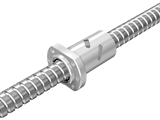
Ball Screw

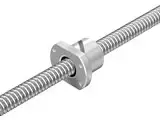
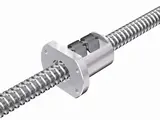
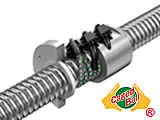
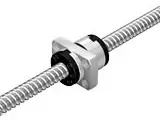
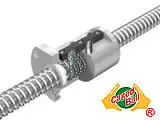
THK Ball Screws represent the pinnacle of precision linear motion technology, engineered to convert rotational motion into smooth, highly accurate linear movement with exceptional efficiency. These components feature precisely ground screw shafts with helical raceways and matching nuts containing recirculating ball bearings that roll along these tracks. This fundamental design eliminates sliding friction, achieving mechanical efficiencies exceeding 90% – a dramatic improvement over traditional Acme screws. The ball screw’s construction includes a screw shaft, nut, ball bearings, and a ball return system that continuously circulates the balls through the load-bearing zone, creating a perpetually rolling motion.

Several technical features distinguish THK Ball Screws in demanding applications. Their precision grinding technology ensures lead accuracy grades from standard (C7) to ultra-precise (C0), with the highest grade achieving positional accuracy within 5 micrometers per 300mm of travel. Advanced preloading methods – including double-nut and offset preload designs – eliminate axial play while maintaining smooth operation under varying load conditions. THK’s proprietary ball circulation systems, such as the deflector and endcap return mechanisms, provide optimized ball flow paths that minimize vibration and noise even at high speeds. Specialized sealing technologies integrate multiple labyrinth seals and wipers to exclude contaminants while retaining lubrication, significantly extending service intervals in harsh environments. The components are available in various configurations including precision ground screws for highest accuracy, rolled screws for cost-effective solutions, and miniature versions for compact applications.

The performance advantages of these ball screws translate directly into operational benefits across industries. Their high efficiency reduces required motor torque, allowing smaller drive components and lower energy consumption. The minimal backlash and high rigidity enable exceptional positional repeatability, critical for precision manufacturing processes. With dynamic load ratings exceeding 30,000 hours in many configurations, THK Ball Screws deliver remarkable longevity that reduces maintenance frequency and total cost of ownership. Their ability to operate at temperatures from -20°C to 80°C without performance degradation ensures reliability across diverse operating conditions. The low noise generation, often below 65 dB even at rapid traverse rates, contributes to improved workplace environments.

In industrial machinery applications, THK Ball Screws serve as the driving force behind CNC machining centers, injection molding machines, and precision presses where they provide the accurate table positioning and high thrust capabilities essential for manufacturing tolerance-critical components. The automotive industry employs these ball screws in electric power steering systems, transmission assembly equipment, and brake line manufacturing machinery where reliability and precision directly impact vehicle safety and performance. Throughout precision equipment sectors, they enable the exacting motion requirements of semiconductor manufacturing apparatus, medical diagnostic devices, and coordinate measuring machines – applications where sub-micron positioning accuracy is non-negotiable. From high-speed packaging lines to aerospace component fabrication, THK Ball Screws deliver the precise, reliable linear motion that modern industrial systems demand.

MORE +
CLOSE +
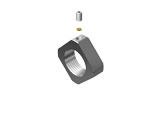
THK Ball Screw Lock Nuts are precision-engineered fastening components designed to securely fix ball nuts onto ball screws, preventing axial play and ensuring consistent, reliable performance in linear motion systems. These lock nuts feature a unique split design with a tapered external surface that mates with a corresponding tapered bore in the ball nut housing. When the lock nut is tightened, the tapered surfaces create a uniform clamping force around the entire circumference of the ball nut, eliminating gaps and minimizing the risk of loosening under dynamic loads or vibration. Manufactured from high-strength alloy steel and often treated with surface hardening processes like black oxide or phosphate coating, THK lock nuts offer excellent wear resistance and corrosion protection, extending service life even in harsh operating environments. Key technical features include precise thread tolerances that ensure smooth engagement with ball screw shafts without binding or cross-threading. The split construction allows for elastic deformation during tightening, which compensates for minor dimensional variations and maintains clamping force over time. Many THK lock nuts incorporate locking elements such as set screws or nylon inserts that provide secondary retention, adding an extra layer of security against rotational loosening. The compact design minimizes axial space requirements, making them suitable for applications with limited installation clearance. Performance advantages are significant: these lock nuts deliver high rigidity and stiffness, which reduces system deflection and improves positioning accuracy. By eliminating backlash, they enhance repeatability in precision applications, contributing to tighter tolerances and improved product quality. The robust clamping mechanism ensures stable preload retention, which is critical for maintaining smooth motion and reducing vibration-induced noise. This results in lower maintenance needs, as the secure fastening reduces wear on both the ball nut and screw, leading to longer intervals between adjustments or replacements. In industrial machinery, THK Ball Screw Lock Nuts are widely used in CNC machine tools, where they secure ball nuts on axes responsible for precise tool positioning, ensuring repeatable cuts and high surface finish quality. They are also found in injection molding machines, where they maintain clamp force accuracy during high-pressure cycles, and in semiconductor manufacturing equipment, where vibration resistance is essential for wafer handling and lithography processes. Automotive systems leverage these components in electric power steering mechanisms, where they prevent play in the steering rack ball nuts, enhancing driver feedback and safety. They are also employed in automotive assembly robots for consistent weld gun positioning and in brake testing equipment that requires reliable linear actuation. Precision equipment applications include coordinate measuring machines (CMMs), where lock nuts ensure probe positioning accuracy, and optical alignment systems in telescopes or laser cutters, where minimal backlash is crucial for alignment stability. Medical devices such as MRI scanners and robotic surgery arms utilize these lock nuts to guarantee smooth, precise linear movements without slippage, supporting critical diagnostic and operational functions.
View
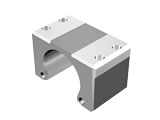
The THK Ball Screw Nut Bracket is a precision-engineered mounting component designed to securely fix ball screw nuts in linear motion systems, ensuring optimal alignment and force transmission. Constructed from high-strength materials such as carbon steel or stainless steel, these brackets feature machined mounting surfaces and precisely located bolt holes to maintain the ball screw nut’s coaxiality with the screw shaft. This rigid fixation minimizes deflection, vibration, and misalignment, which are critical for preserving the accuracy and longevity of the entire drive system. Many models incorporate sealing options to protect the ball screw assembly from contaminants like dust, chips, or moisture, enhancing reliability in harsh environments. Key technical features include standardized mounting interfaces compatible with THK’s ball screw nut series, allowing for seamless integration into existing linear guides or custom machinery frames. The brackets are often designed with weight-reducing cutouts without compromising structural integrity, and surface treatments such as black oxide or zinc plating provide corrosion resistance. Dimensional tolerances are tightly controlled to ensure repeatable positioning, while some variants include adjustment mechanisms for fine-tuning the nut’s alignment during installation. This attention to detail ensures that the bracket acts as a stable foundation, preventing parasitic motions that could degrade system performance. Performance advantages begin with enhanced rigidity, which directly translates to higher positional accuracy and repeatability in linear motion. By eliminating free play and reducing elastic deformation under load, the bracket helps maximize the ball screw’s efficiency and thrust capacity. This stability also dampens vibrations, leading to smoother operation and reduced noise levels—particularly beneficial in high-speed applications. Additionally, the robust design distributes loads evenly across the mounting structure, extending the service life of both the ball screw and associated components by preventing stress concentrations. In terms of maintenance, the secure mounting simplifies inspection and replacement procedures, reducing downtime in industrial settings. Typical applications span across industries where precision linear motion is paramount. In industrial machinery, THK Ball Screw Nut Brackets are used in CNC machining centers to position tooling slides, in semiconductor manufacturing equipment for wafer handling robots, and in packaging machines for synchronized product transfer. Automotive systems leverage these brackets in electric power steering mechanisms for precise rack positioning, in automated assembly lines for robotic welding arms, and in brake testing rigs that require accurate linear displacement control. Precision equipment applications include medical devices such as MRI scanner tables and surgical robots, where smooth, backlash-free movement is critical, as well as coordinate measuring machines (CMMs) and optical alignment systems that demand micron-level accuracy. By providing a reliable interface between the ball screw nut and machine structure, these brackets ensure consistent performance in demanding operational conditions.
View
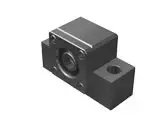
THK Ball Screw Support Units are precision-engineered components designed to provide stable, reliable support for ball screw assemblies, ensuring optimal performance and longevity in demanding motion control applications. These units consist of high-rigidity, angular contact ball bearings pre-adjusted for minimal axial play, housed within compact, sealed support blocks that accommodate radial and axial loads with exceptional efficiency. Manufactured to exacting tolerances, they feature standardized mounting dimensions for seamless integration with THK ball screws and other compatible systems, reducing installation complexity and maintenance requirements. Key technical attributes include corrosion-resistant housings, integrated sealing mechanisms to prevent lubricant leakage and contaminant ingress, and precision-ground mounting surfaces that guarantee accurate alignment with driven components. The bearings within the support units are pre-lubricated with high-performance grease, enabling maintenance-free operation over extended periods while sustaining smooth rotational motion under high-speed or high-load conditions. Performance advantages of THK Ball Screw Support Units stem from their ability to enhance system rigidity, minimize deflection, and suppress vibration during operation. By providing robust axial support, they contribute to higher positioning accuracy and repeatability in linear motion systems, critical for applications where micron-level precision is paramount. The optimized bearing design reduces friction and heat generation, leading to improved energy efficiency and extended service life of both the support unit and the associated ball screw. Their compact form factor allows for space-saving machine designs without compromising load capacity or durability. Additionally, the units’ sealed construction ensures consistent performance in harsh environments, including those with exposure to dust, moisture, or chemical agents, making them suitable for use in unconditioned industrial settings. Typical applications for THK Ball Screw Support Units span a diverse range of industries and equipment types. In industrial machinery, they are integral to CNC machining centers, where they support ball screws driving tool positioning slides, enabling high-speed, precise metal cutting operations. Injection molding machines utilize these units to maintain accuracy in platen movement, ensuring consistent part quality and cycle times. Within automotive manufacturing systems, they are employed in robotic welding arms and assembly line transfer mechanisms, providing the reliability needed for high-throughput production environments. Precision equipment such as semiconductor manufacturing apparatus, coordinate measuring machines, and optical alignment devices rely on these support units to achieve sub-micron positioning stability. Medical imaging systems, including CT scanners and MRI beds, also incorporate them to facilitate smooth, precise patient positioning. By delivering unwavering support under varying operational demands, THK Ball Screw Support Units play a pivotal role in enhancing the performance, reliability, and efficiency of advanced linear motion systems across these sectors.
View
THK Ball Screw Rotary Nut Ball Screws represent a specialized category of precision linear motion components where the nut rotates while the screw remains stationary, reversing the typical operational configuration of standard ball screws. This design is engineered to address specific mechanical challenges in applications requiring compact, high-efficiency rotary-to-linear motion conversion. The system consists of a precision-ground screw shaft with a helical raceway and a nut that incorporates a circulating ball mechanism, allowing for smooth, low-friction movement. Key technical features include the use of high-carbon chromium bearing steel for both the screw and nut, ensuring exceptional hardness and wear resistance. The nut is designed with integrated flange mounts for secure attachment to rotating elements like servo motors or gearboxes, while the screw can be fixed axially to prevent rotation. Preload adjustment mechanisms are often incorporated to eliminate backlash, maintaining positioning accuracy even under varying loads. Advanced sealing options, such as labyrinth seals or wipers, protect the internal ball circuits from contaminants like dust, chips, or moisture, extending service life in harsh environments. Performance advantages of THK Rotary Nut Ball Screws are substantial, starting with their ability to achieve high linear speeds and accelerations due to the rotating nut’s lower inertia compared to moving the entire screw assembly. This makes them ideal for dynamic applications where rapid positioning is critical. They offer positioning accuracy within microns and repeatability that meets the demands of precision automation, supported by THK’s proprietary grinding technologies that minimize cumulative pitch errors. Efficiency is another standout benefit; with a mechanical efficiency exceeding 90%, they reduce power consumption and heat generation, allowing for continuous operation without derating. The compact design saves valuable space in machinery layouts, as the stationary screw eliminates the need for long rotational clearances. Durability is enhanced through optimized heat treatment processes and surface finishing, which resist pitting and fatigue under high-load conditions. Noise levels are notably low due to precision-machined components and smooth ball recirculation, contributing to quieter operational environments. Typical applications leverage these strengths across multiple industries. In industrial machinery, THK Rotary Nut Ball Screws are deployed in CNC machining centers for tool changers and pallet shuttles, where their high-speed and accuracy enable reduced cycle times. They are integral to automated assembly lines, driving pick-and-place units and linear actuators in robotics. Within automotive manufacturing, these components are found in welding robots, tire mounting systems, and engine assembly equipment, providing the reliability needed for high-volume production. Precision equipment sectors utilize them in semiconductor manufacturing apparatus, such as wafer handling robots and lithography stages, where sub-micron accuracy is non-negotiable. Medical device manufacturers incorporate these ball screws into MRI positioning tables and surgical robot arms, benefiting from their smooth motion and contamination resistance. Additionally, they serve in aerospace testing rigs and optical alignment systems, where their low backlash and high stiffness ensure consistent performance under demanding conditions.
View
THK Ball Screw Transport Ball Screws represent a pinnacle of engineering in converting rotational motion into precise linear movement, specifically designed for demanding transportation and positioning applications across industrial sectors. These components feature a screw shaft with a precision-ground helical raceway and a nut containing recirculating balls that travel along this path, ensuring minimal friction and highly efficient power transmission. Manufactured with exceptional accuracy, THK Ball Screws achieve lead accuracies as tight as 5 micrometers per 300 mm, guaranteeing repeatable positioning critical for automated systems. Their robust construction often incorporates single or double-nut designs with preloading mechanisms to eliminate axial play, enhancing rigidity and load capacity while resisting backlash under varying operational forces. Key technical features include the utilization of high-carbon chromium bearing steel, hardened to between 58-62 HRC, providing superior wear resistance and longevity. The balls themselves are manufactured to grade 10 or higher tolerances, and the nut often integrates a compact, highly efficient recirculation system—such as THK’s deflector or end cap designs—that ensures smooth ball circulation even at high speeds. Many models are available with optional seals and wipers to prevent contamination from dust, chips, or moisture, which is vital for maintaining performance in harsh environments. For transport applications, these ball screws are engineered to handle dynamic loads exceeding 20 kN and permissible rotational speeds up to 5,000 rpm, depending on the diameter and lead configuration. Their high mechanical efficiency, typically between 90-95%, translates to reduced power consumption and lower heat generation compared to alternative screw systems. Performance advantages are substantial in real-world applications. In industrial machinery, such as CNC machining centers and automated assembly lines, THK Transport Ball Screws provide the precise table movements and tool positioning necessary for high-speed, high-accuracy manufacturing. Their rigidity and preload capability minimize deflection under heavy cutting forces, directly improving surface finish quality and dimensional accuracy of machined parts. Within automotive production systems, these ball screws drive robotic welders, material handling gantries, and precision press feeders, where their durability and sustained accuracy under continuous operation reduce downtime and maintenance costs. In precision equipment like semiconductor manufacturing apparatus or medical automation devices, the ball screws’ smooth motion and micron-level precision enable critical processes such as wafer stepper positioning or automated liquid handling, where vibration and positional error are unacceptable. Typical applications extend to packaging machinery, where they synchronize film feed and sealing operations; printing presses for precise paper advancement; and aerospace test stands for actuating control surfaces. Their ability to deliver consistent performance across millions of cycles makes them a cornerstone in modern automation, enhancing throughput and reliability while supporting advancements in manufacturing technology and precision engineering.
View
THK Ball Screw High Thrust Ball Screw SERIES represents a pinnacle of engineering in linear motion technology, designed specifically to deliver exceptional axial load capacity and precision in demanding industrial applications. These ball screws utilize a unique recirculating ball mechanism between the screw shaft and nut to convert rotational motion into smooth, highly efficient linear movement with minimal friction. The high thrust capability is achieved through optimized ball groove geometry, increased ball circuit count, and advanced materials that collectively withstand extreme forces while maintaining operational stability. Key technical features include precision-ground screw shafts with accuracies meeting ISO standards JIS C0-C5 grades, ensuring repeatable positioning within microns. The nut design incorporates enhanced sealing systems with multi-lip seals and wipers that effectively exclude contaminants like metal chips and dust while retaining lubrication, significantly extending service life in harsh environments. Special preloading mechanisms—using double-nut or offset preload methods—eliminate backlash and provide consistent torque transmission, crucial for applications requiring high rigidity and vibration damping. The series offers various flange types, shaft end machining options, and custom lengths to accommodate diverse mounting configurations. Performance advantages are substantial across multiple metrics. These ball screws achieve mechanical efficiencies exceeding 90%, reducing energy consumption and heat generation compared to alternative drive systems. Their high dynamic load ratings allow for accelerated operational speeds without sacrificing precision, while the optimized recirculation path minimizes noise levels below 65 dB even under heavy loads. Maintenance intervals are extended through the use of long-life grease reservoirs and corrosion-resistant surface treatments like black oxide or hard chromium plating. The design’s inherent stiffness reduces deflection under load, enabling higher feed rates and improved machining accuracy in repetitive cycles. Typical applications span critical sectors where reliability and force transmission are paramount. In industrial machinery, they drive high-precision CNC machining centers, injection molding machines requiring consistent clamp force, and semiconductor manufacturing equipment where sub-micron positioning is essential. Automotive production lines employ them in robotic welding arms for chassis assembly, electric power steering systems for responsive control, and brake testing rigs demanding repeatable linear force. Precision equipment applications include medical devices like MRI table positioning systems, aerospace actuator controls for flight surfaces, and optical instrument focusing mechanisms where smooth motion and minimal backlash determine operational success. The series’ adaptability to customized configurations—such as vacuum-ready versions or high-temperature variants—ensures compatibility with specialized operational environments across these fields.
View
THK Ball Screw Finished Shaft Ends Ball Screw SERIES represents a fully machined and ready-to-install linear motion solution engineered for high precision and operational efficiency. These ball screws feature pre-finished shaft ends that eliminate the need for secondary machining, allowing for direct integration into machinery and equipment. The series incorporates precision-ground threads with a meticulously designed ball recirculation system, ensuring smooth, low-friction motion and consistent performance under varying loads and speeds. Key technical features include high axial rigidity, achieved through optimized screw shaft diameters and nut designs, and advanced sealing mechanisms that protect against contaminants like dust and moisture, extending service life in demanding environments. The ball screws are available in a range of accuracies, from standard to precision grades, with lead accuracy options tailored to specific application requirements. Performance advantages of the THK Ball Screw Finished Shaft Ends SERIES are rooted in their reliability and energy efficiency. The precision engineering minimizes backlash and provides exceptional positional accuracy, which is critical for applications requiring repeatable movements. With high mechanical efficiency, often exceeding 90%, these ball screws reduce power consumption and heat generation, contributing to longer operational lifespans and lower maintenance costs. Their robust construction allows for high load capacities, including dynamic and static loads, while maintaining smooth operation at speeds suited for industrial automation. Additionally, the finished shaft ends simplify assembly, reducing installation time and the risk of alignment errors, which is particularly beneficial in high-volume production settings. In industrial machinery, these ball screws are widely used in CNC machining centers, where they facilitate precise tool positioning and feed motions, enhancing machining accuracy and surface finish quality. They are also integral to injection molding machines, controlling mold clamping and ejection processes with high repeatability. In automotive systems, the series finds applications in electric power steering mechanisms, providing responsive and reliable steering control, and in automated assembly lines for tasks like robotic welding and part handling. For precision equipment, THK Ball Screw Finished Shaft Ends are employed in semiconductor manufacturing devices, such as wafer steppers and wire bonders, where nanometer-level precision is essential. They also support medical imaging systems, including CT scanners and MRI machines, enabling smooth and accurate patient table movements. This versatility, combined with THK's commitment to quality, makes the series a preferred choice for engineers seeking dependable linear motion solutions across diverse sectors.
View
THK Ball Screw Precision, Caged Ball Screw represents a significant evolution in linear motion technology, engineered to deliver exceptional accuracy, reliability, and longevity in demanding applications. This innovative design incorporates a unique caged ball mechanism that fundamentally enhances performance by preventing direct ball-to-ball contact during operation. The cage structure ensures smooth, consistent motion while minimizing friction, heat generation, and wear, resulting in a product that outperforms conventional ball screws in critical metrics. Key technical features include precision-ground threads with tight tolerances, ensuring minimal axial play and high positional accuracy. The caged ball design allows for optimized recirculation paths, reducing noise and vibration even at high speeds. These screws are available in various accuracy grades, from standard to ultra-precise, catering to diverse application requirements. Materials such as high-carbon chromium bearing steel and advanced surface treatments provide superior corrosion resistance and durability. Optional preloading configurations further enhance rigidity and eliminate backlash, making them ideal for applications requiring high stiffness and repeatability. Performance advantages are substantial, starting with extended service life due to reduced wear and lower operating temperatures. The caged design enables higher maximum speeds and accelerations without compromising precision, while maintaining smooth motion characteristics that reduce settling times in positioning systems. Efficiency gains are notable, with lower torque requirements and consistent performance over time, translating to energy savings and reduced maintenance intervals. These screws demonstrate exceptional resistance to shock loads and environmental contaminants, ensuring reliable operation in harsh conditions. Typical applications span multiple high-performance sectors. In industrial machinery, THK Caged Ball Screws are integral to CNC machining centers, where they provide precise tool positioning and high-speed contouring capabilities. They drive automated assembly systems, robotic arms, and semiconductor manufacturing equipment, where accuracy and repeatability are paramount. Within automotive systems, these components are found in electric power steering mechanisms, transmission control systems, and advanced braking assemblies, contributing to vehicle safety and efficiency. In precision equipment, they enable the exacting movements required in medical devices like MRI scanners and surgical robots, as well as in optical alignment systems and coordinate measuring machines. Their robustness also suits them for aerospace applications, including flight control actuators and satellite positioning mechanisms, where failure is not an option. By combining advanced engineering with proven reliability, THK Ball Screw Precision, Caged Ball Screw solutions empower industries to achieve new levels of productivity and precision in their most critical motion control challenges.
View
THK Ball Screw DIN Standard Compliant Ball Screws represent a pinnacle of precision engineering, designed to deliver exceptional accuracy, reliability, and efficiency in motion control applications. These ball screws conform to the rigorous DIN (Deutsches Institut für Normung) standards, ensuring dimensional consistency, interchangeability, and compatibility with a wide range of industrial systems. At their core, THK ball screws convert rotary motion into linear motion with minimal friction, utilizing a screw shaft and a nut containing recirculating ball bearings. This design minimizes energy loss and enables high-speed, high-precision positioning, making them indispensable in demanding environments. Key technical features include precision-ground screw shafts with tight tolerance grades, such as C5 or C7, which guarantee smooth operation and minimal backlash. The nuts are engineered with optimized ball circulation systems, including end-cap or deflector types, to ensure consistent ball movement and reduce vibration. Materials like high-carbon chromium bearing steel, often subjected to induction hardening and precision grinding, enhance durability and wear resistance. Additionally, seals and wipers are integrated to protect against contaminants like dust and moisture, extending service life in harsh conditions. Preloading options allow for adjustable rigidity and eliminate axial play, catering to applications requiring high stiffness and repeatability. Performance advantages of THK DIN-compliant ball screws are substantial. They achieve efficiencies exceeding 90%, significantly higher than traditional lead screws, leading to reduced power consumption and heat generation. Their low friction characteristics contribute to longer operational life and maintenance intervals, while the high positional accuracy—often within micrometers—ensures consistent results in precision tasks. Noise levels are minimized through refined ball recirculation designs, making them suitable for quiet operation in sensitive settings. Moreover, compliance with DIN standards facilitates easy integration and replacement, reducing downtime and inventory costs for manufacturers. Typical applications span diverse sectors, leveraging these ball screws for their robustness and precision. In industrial machinery, they are integral to CNC machine tools, robotic arms, and automated assembly lines, where precise linear movement is critical for machining, pick-and-place operations, and material handling. Automotive systems benefit from their use in electric power steering mechanisms, transmission controls, and brake systems, enhancing vehicle safety and responsiveness. In precision equipment, such as medical devices (e.g., MRI scanners and surgical robots), semiconductor manufacturing tools, and optical instruments, THK ball screws ensure stable, accurate positioning that meets stringent quality standards. By combining adherence to international norms with advanced engineering, THK DIN Standard Compliant Ball Screws provide a reliable solution for enhancing productivity and innovation across industries.

View