Flat Roller

THK Flat Roller linear motion systems represent a significant advancement in roller-based guide technology, engineered to deliver exceptional rigidity, high load capacity, and smooth, precise movement under demanding industrial conditions. Unlike traditional ball-based systems, the Flat Roller design utilizes cylindrical rollers arranged in a flat, raceway configuration. This fundamental design choice eliminates the inherent stress concentrations found at the point contacts of balls, distributing loads over a broader surface area. The result is a guide mechanism capable of withstanding immense moment loads and forces from multiple directions without sacrificing operational smoothness or positional accuracy.

The technical features of the THK Flat Roller system are defined by its robust construction and intelligent roller management. The core component is the LM guide, which incorporates a rigid, precision-machined rail and a block containing the roller recirculation system. The rollers themselves are manufactured to exceptionally tight tolerances, ensuring consistent size and geometry for uniform load distribution and minimal vibration. A critical feature is the patented roller retainer, which prevents skewing and ensures the rollers maintain correct orientation throughout the recirculation path. This not only guarantees quiet, stable operation at high speeds but also significantly extends the system’s service life by eliminating metal-to-metal contact and resultant wear between adjacent rollers.

Performance advantages are immediately evident in applications requiring supreme stiffness and heavy-load support. The large contact area between the rollers and the raceway grants the system a static load capacity several times greater than comparable ball-type guides of the same size. This inherent rigidity minimizes elastic deformation under load, leading to dramatically improved positioning accuracy and repeatability, even when subjected to heavy cutting forces or shock loads. Furthermore, the optimized sealing systems effectively shield the precision rolling elements from contaminants like dust, chips, and moisture, ensuring reliable performance and long-term accuracy in harsh environments such as machine shops or automated foundries.

Typical applications for THK Flat Roller systems are found wherever high precision and brute strength are non-negotiable. In industrial machinery, they are the backbone of heavy-duty machining centers, providing the stable platform for high-precision milling, drilling, and grinding operations. They are integral to the gantry systems of large-format CNC routers and laser cutters, where resistance to deflection over long spans is critical. Within the automotive industry, these components are deployed in high-throughput robotic welding and assembly lines, where they endure constant, high-moment loads with unwavering reliability. In the realm of precision equipment, THK Flat Roller guides are essential in semiconductor manufacturing apparatus, inspection machines, and precision measuring instruments, where their minimal friction, high rigidity, and smooth motion are paramount for achieving micron-level accuracy.
MORE +
CLOSE +
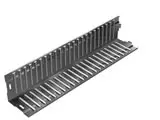
The THK Flat Roller V Groove Type Model FTW represents a specialized linear motion solution engineered for applications requiring high rigidity, precise alignment, and smooth movement under heavy loads. This system features a unique V-groove design where flat rollers with precisely machined V-shaped grooves engage with corresponding V-guide rails, creating a robust mechanical interface that minimizes play and maximizes stability. The rollers are manufactured from high-carbon chromium bearing steel (SUJ2) and undergo rigorous heat treatment to achieve a surface hardness of 58-64 HRC, ensuring exceptional wear resistance and longevity. Each roller is precision-ground to maintain tight tolerances, with radial and axial runouts controlled within microns to guarantee consistent performance. The assembly incorporates a sealed structure with integrated grease reservoirs and multi-lip seals that effectively exclude contaminants like dust, chips, and moisture while retaining lubrication, making the system suitable for harsh operating environments. Pre-load adjustment mechanisms allow for fine-tuning of the roller-to-rail contact, eliminating backlash and enhancing positional accuracy during reciprocating or complex motion paths. Performance advantages of the FTW model stem directly from its mechanical design. The large contact area between the V-groove rollers and rails distributes loads evenly, resulting in a high load capacity—up to 2.5 times that of equivalent ball-based systems—while maintaining low friction coefficients through optimized roller profiles and premium grease formulations. This configuration delivers remarkable rigidity, with deflection under load minimized to preserve alignment accuracy even during high-moment applications. The system operates smoothly across speed ranges from creep speeds to 2 m/s, with vibration and noise levels significantly reduced compared to alternative guides. Maintenance requirements are minimal due to the long-term lubrication retention and corrosion-resistant treatments applied to all components, including zinc-nickel plating or black oxide finishes on rails. Installation is simplified through machined reference edges and standardized mounting hole patterns that facilitate precise alignment without specialized tools, reducing assembly time and potential errors. Typical applications leverage these characteristics across multiple industries. In industrial machinery, the FTW model is deployed in heavy-duty CNC machining centers for pallet changers and tool magazine transports, where its high rigidity prevents deflection during rapid indexing and its contamination resistance ensures reliability in coolant-rich environments. Automotive manufacturing systems utilize these guides in welding robot bases and assembly line transfer units, where the combination of high load capacity and smooth motion supports precise positioning of heavy components like car bodies or powertrains. Precision equipment applications include semiconductor wafer handling robots and medical device assembly machines, where the low vibration and minimal backlash are critical for sub-millimeter accuracy. The system's durability also makes it suitable for packaging machinery, printing presses, and automated storage systems that demand continuous operation with minimal downtime. By integrating the FTK Flat Roller V Groove Type Model FTW, engineers achieve a balance of strength, precision, and reliability that enhances overall equipment performance while reducing lifecycle costs through extended service intervals and consistent operation under demanding conditions.
View
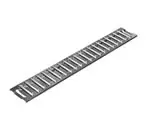
THK's Flat Roller Flat Surface Type Model FT represents a specialized linear motion solution engineered for applications demanding exceptional rigidity, high load capacity, and smooth, precise travel along a flat surface. This system fundamentally departs from traditional ball-based guides by utilizing cylindrical rollers as the rolling elements within its compact, single-axis unit. The core of the Model FT consists of a robust guide rail with precisely ground raceways and a carriage block that houses the rollers, which are retained by a highly durable resin retainer. This retainer is critical, as it prevents skewing and ensures the rollers circulate smoothly, maintaining consistent contact and eliminating metal-to-metal contact between the rollers themselves to minimize wear, vibration, and noise generation. The technical features of the Model FT are defined by its roller-based design. The line contact of the rollers with the raceway, as opposed to the point contact of balls, is the primary source of its performance advantages. This contact geometry grants the system an exceptionally high load rating in all directions—radial, reverse-radial, and lateral. Its static load capacity is substantially greater than similarly sized ball guide systems, making it inherently more rigid and resistant to elastic deformation under heavy loads or moment forces. This results in unparalleled positional accuracy and stability, with minimal deflection during operation. The optimized recirculation path and the use of high-grade, case-hardened steel for all critical components ensure high durability, long service life, and consistent performance even in demanding environments characterized by shock, vibration, and continuous heavy-duty cycles. These performance characteristics make the THK Model FT an ideal choice for a wide range of demanding industrial applications. In industrial machinery, it is frequently specified for the critical axes of machine tools, such as in the feed mechanisms of machining centers, grinding machines, and turning centers, where its high rigidity directly translates to improved surface finish and part tolerances. Within the realm of automotive manufacturing systems, the FT model is found in high-precision welding robots, heavy-duty transfer lines, and precision press-feeding equipment, where it reliably handles high moment loads and repetitive, high-impact operations. For precision equipment, its stability and smooth motion are indispensable in semiconductor manufacturing apparatus, including wafer steppers and probing machines, as well as in precision inspection and measuring instruments where even micron-level vibration or deflection is unacceptable. The THK Flat Roller Flat Surface Type Model FT, therefore, stands as a superior motion component for engineers seeking to maximize stiffness, load capacity, and precision in the most challenging automation and production environments.
View