Caged Ball LM Guide

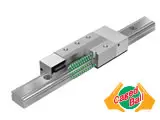
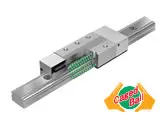
THK’s Caged Ball LM Guide represents a significant evolution in linear motion technology, addressing fundamental limitations of conventional ball-based guide systems. At its core, this system retains the recirculating ball principle but introduces a revolutionary polymer cage that fully encapsulates each ball bearing within its own individual compartment. This cage structure fundamentally transforms the operational dynamics of the guide mechanism, eliminating direct ball-to-ball contact that traditionally causes friction, heat generation, and lubricant starvation in high-speed applications. The result is a linear guide system offering exceptionally smooth motion with minimal resistance, even under demanding operational conditions.

The technical features of the Caged Ball LM Guide are engineered for superior performance and longevity. The precision-engineered cage maintains perfect ball spacing and alignment, ensuring consistent load distribution across all contact points. This design drastically reduces torque variation and provides exceptional running accuracy, making it ideal for applications requiring precise positional control. The system’s ability to operate effectively with minimal lubrication is another critical advantage, as the cage prevents lubricant from being scraped away by adjacent balls. This not only extends maintenance intervals but also makes the system suitable for clean environments where lubricant contamination is a concern. Furthermore, the cage acts as a debris barrier, protecting the precision ball grooves from particulate contamination that could otherwise lead to premature wear and failure.

Performance advantages translate directly into operational benefits across various industries. In industrial automation, these guides provide the high-speed, low-vibration motion essential for pick-and-place robots, CNC tool changers, and high-throughput assembly lines where cycle time and positioning repeatability are paramount. The automotive manufacturing sector utilizes these guides in precision welding systems, laser cutting equipment, and automated inspection stations, where their resistance to shock loads and consistent performance under high-duty cycles ensure uninterrupted production. For precision equipment, the Caged Ball LM Guide’s minimal torque variation and smooth motion characteristics make it indispensable in semiconductor manufacturing equipment, medical diagnostic devices, and coordinate measuring machines where nanometer-level precision and vibration-free operation are non-negotiable requirements. The combination of high-speed capability, extended service life, and reduced maintenance needs positions THK’s Caged Ball LM Guide as a superior solution for modern linear motion challenges across multiple demanding industrial sectors.

MORE +
CLOSE +
THK's LM Guide Caged Ball, LM Guide Cross, and LM Guide Model SCR represent specialized linear motion solutions engineered for distinct performance requirements across industrial, automotive, and precision equipment sectors. The LM Guide Caged Ball series incorporates a unique caged ball retainer system that separates adjacent steel balls, drastically reducing friction and heat generation while eliminating ball-to-ball contact. This design ensures smooth, high-speed operation with minimal maintenance needs, even under demanding conditions. Key technical features include precision-ground raceways for consistent load distribution, high rigidity from optimized contact angles, and corrosion-resistant options for harsh environments. Performance advantages encompass extended service life, reduced noise and vibration, and the ability to sustain velocities up to 5 m/s with minimal lubrication intervals. Typical applications include high-speed machining centers, semiconductor manufacturing equipment, and automated assembly lines where precision and reliability are paramount. The LM Guide Cross variant integrates a cross-roller design, where cylindrical rollers are arranged orthogonally in a dedicated retainer. This configuration provides exceptional rigidity and moment load capacity, making it ideal for applications requiring high positional accuracy under complex loading scenarios. Technical highlights feature four-directional equal load characteristics, superior resistance to deformation under overturning moments, and compact dimensions that save space in machine designs. Performance benefits include nanometer-level repeatability, enhanced stability during heavy cutting operations, and reduced thermal displacement. Industries leverage these guides in precision grinding machines, coordinate measuring instruments, and robotics for tasks like wafer handling or optical alignment, where minimal deflection and vibration damping are critical. For scenarios demanding compactness and cost-effectiveness without sacrificing performance, the LM Guide Model SCR employs a single-row, compact ball circuit with a resin retainer. Its slim profile and lightweight construction make it suitable for space-constrained installations, while maintaining smooth motion and moderate load capacities. Technical attributes include a simplified structure for easy maintenance, sealed end caps to prevent contaminant ingress, and compatibility with various mounting orientations. Advantages include energy efficiency due to low friction, quiet operation ideal for cleanroom environments, and quick installation that reduces downtime. Common uses span automotive actuator systems, medical device positioning stages, packaging machinery conveyors, and small-scale automation equipment where space optimization and reliability are prioritized. Collectively, these THK LM Guide models address diverse operational challenges—from high-speed precision to heavy-load rigidity and compact integration—ensuring optimized motion control in applications ranging from industrial robotics to advanced automotive manufacturing and sensitive laboratory instrumentation.
View
The THK LM Guide Caged Ball LM Guide Limited Stroke Model EPF SERIES represents a specialized linear motion solution engineered for applications requiring precise, controlled movement within a confined travel range. This compact, high-performance guide system incorporates a unique caged ball design where precision steel balls are retained and guided by a polymer cage, effectively eliminating metal-to-metal contact between the balls. This fundamental design characteristic drastically reduces friction, minimizes heat generation, and virtually eliminates the need for relubrication throughout the system's operational life. Several key technical features define the EPF SERIES. The caged ball mechanism is central, preventing ball-to-ball contact and thus reducing rotational torque variation and wear. This results in exceptionally smooth, consistent motion. The series is constructed with a high-rigidity, compact cross-section, making it ideal for installations where space is at a premium. It utilizes a limited stroke design, meaning the moving block travels a fixed, predefined distance, which is a critical requirement for many automated processes. The guide rails and blocks are manufactured from high-carbon chromium bearing steel, heat-treated to provide superior hardness and long-term dimensional stability. Sealing systems are integrated to effectively shield the critical ball recirculation paths from contaminants like dust, chips, and moisture, ensuring reliability in demanding environments. The performance advantages stemming from this design are substantial for machine builders and designers. The reduction in friction directly translates to lower driving force requirements, allowing for the use of smaller, more energy-efficient motors and drives. The smooth motion characteristics contribute to higher positional accuracy and repeatability, which is paramount in precision manufacturing and assembly. The long-term maintenance-free operation, a direct benefit of the caged ball and effective sealing, significantly reduces total cost of ownership by minimizing downtime and lubricant consumption. Furthermore, the compact design enables the construction of more streamlined and space-efficient machinery without sacrificing performance or load capacity. Typical applications for the EPF SERIES are found across industries where reliable, short-stroke linear motion is critical. In industrial automation, these guides are extensively used in the pick-and-place units of assembly robots, precision indexing tables, and the linear actuators within automated test and inspection equipment. Within the automotive manufacturing sector, they provide the precise linear movement required in valve assembly machines, fuel injector testing apparatus, and components of automated welding and painting systems. In the realm of precision equipment, the EPF SERIES is an ideal component for semiconductor manufacturing tools, optical positioning stages, and the sensitive linear drives within medical diagnostic devices, where cleanliness, smooth operation, and unwavering accuracy are non-negotiable.
View
The THK LM Guide Caged Ball LM Guide Miniature Model SRS represents a specialized advancement in compact linear motion technology, engineered for applications demanding high precision, minimal space requirements, and reliable performance under constrained conditions. This model integrates THK’s proprietary caged ball design within a miniature framework, ensuring smooth, friction-reduced movement ideal for delicate or high-speed operations. Key technical features include a unique ball retainer system that prevents ball-to-ball contact, reducing heat generation and wear while maintaining consistent lubrication distribution. The SRS series is characterized by its compact cross-sectional dimensions, high rigidity from a reinforced steel shell, and precision-ground raceways that guarantee exceptional accuracy and repeatability. Manufactured with high-grade stainless steel or alloy components, it offers corrosion resistance and durability in harsh environments, complemented by optional seals to protect against contaminants like dust and moisture. Performance advantages of the SRS model stem from its optimized design, delivering low noise operation, enhanced speed capabilities, and extended service life due to reduced mechanical stress on the balls and raceways. The caged ball mechanism minimizes torque fluctuations, allowing for smoother starts and stops, which is critical in applications requiring precise positioning. Its lightweight construction reduces inertial loads, enabling faster acceleration and deceleration cycles without sacrificing stability. Additionally, the guide exhibits high load capacity relative to its size, supporting both radial and lateral forces efficiently. This makes it suitable for dynamic movements in automated systems, where space savings and energy efficiency are paramount. Maintenance is simplified as the caged design retains lubrication longer and minimizes the need for frequent re-greasing, lowering total cost of ownership over time. Typical applications for the THK LM Guide Caged Ball Miniature Model SRS span across industries where precision and compactness are non-negotiable. In industrial machinery, it is commonly deployed in CNC machining centers for tool changers, semiconductor manufacturing equipment for wafer handling robots, and packaging machines for precise linear indexing. Within automotive systems, the SRS guide finds use in fuel injection systems, transmission actuators, and advanced driver-assistance sensors requiring minute, repeatable adjustments. In precision equipment, it supports the motion stages of medical devices like MRI scanners and laboratory analyzers, as well as optical alignment systems in measuring instruments and 3D printers. By enabling reliable, high-accuracy linear motion in tight spaces, this miniature guide enhances overall system performance, contributing to improved productivity and quality in modern automated and high-tech environments.
View
THK's LM Guide Caged Ball LM Guide Wide Rail Model SHW represents a significant advancement in linear motion technology, engineered to deliver exceptional rigidity, precision, and longevity in demanding industrial environments. This system incorporates a unique caged ball design where precision steel balls are retained and guided by a robust polymer cage, effectively eliminating metal-to-metal contact between the balls. This fundamental design innovation drastically reduces friction and heat generation while preventing ball-to-ball contact, which minimizes wear, extends service life, and ensures consistently smooth motion over prolonged operational periods. The defining technical feature of the SHW model is its wide rail configuration. This design substantially increases the moment load capacity and overall rigidity of the guide system. The wider rail provides a larger support base, enabling the guide to withstand significant overturning moments, shock loads, and vibrations that are common in heavy-duty applications. The recirculating ball circuit, facilitated by the cage, ensures that lubrication is effectively retained and distributed, further enhancing the system's durability and maintenance intervals. This makes the SHW particularly resilient in environments where contamination or harsh operating conditions might compromise other linear guides. Performance advantages are substantial and multifaceted. The caged ball mechanism results in a remarkably smooth and quiet operation, with a lower and more consistent coefficient of friction compared to standard designs. This translates into higher positional accuracy, improved repeatability, and reduced stick-slip phenomena, which is critical for precision machining and assembly processes. The wide rail's inherent stability allows for higher load ratings—both dynamic and static—enabling machinery designers to use a more compact linear motion solution without sacrificing performance or safety margins. The enhanced rigidity also contributes to improved damping characteristics, reducing system vibration and leading to better surface finishes in machining applications and higher overall equipment productivity. Typical applications for the THK SHW Caged Ball LM Guide are found wherever heavy loads, high moment forces, and unwavering precision are non-negotiable. In industrial machinery, it is extensively used in heavy-duty machining centers, large-scale milling machines, grinding equipment, and injection molding machines, where its rigidity supports massive workpieces and cutting tools. Within the automotive manufacturing sector, the SHW guide is ideal for robotic welding arms, heavy-duty material handling systems, precision assembly robots, and stamping press transfers that require reliable motion under extreme forces. In the realm of precision equipment, it provides the stable foundation for semiconductor manufacturing apparatus, precision inspection and measurement machines, and large-format printing equipment, where minimal vibration and sub-micron level accuracy are paramount. Its robust construction and caged ball technology make it a superior choice for upgrading machinery performance, reducing long-term maintenance costs, and ensuring operational reliability in the most challenging industrial settings.
View
The THK LM Guide Caged Ball LM Guide Ultra Heavy Load (4-Way) Model SVS represents a significant advancement in linear motion technology, engineered specifically to withstand extreme loads and deliver unwavering precision in the most demanding industrial environments. This system is distinguished by its unique caged ball design, where precision steel balls are securely retained within a polymer cage. This fundamental design element eliminates metal-to-metal contact between the balls, drastically reducing friction, heat generation, and wear. The "4-Way" load capacity signifies its superior rigidity, enabling it to handle substantial loads from all directions—radial, reverse radial, and lateral—simultaneously. This makes the SVS model exceptionally stable and resistant to moment loads, ensuring minimal deflection and maintaining accuracy even under immense stress. Key technical features of the SVS series include its optimized ball groove geometry, which provides a larger contact area for enhanced load distribution and longevity. The incorporation of the caged ball mechanism is critical; it prevents ball-to-ball friction, effectively eliminating the risk of skidding and ensuring smooth, consistent motion at both high and low speeds. This also allows for higher operational speeds and accelerations compared to standard retainer-less designs. The guides are manufactured from high-carbon chromium bearing steel, heat-treated to achieve exceptional hardness and durability. Sealing systems are integrated to protect the recirculating elements from contaminants like dust, chips, and moisture, ensuring reliable performance and extended service life in harsh conditions. Pre-load adjustments are available to eliminate internal clearance, granting engineers the ability to fine-tune the system for applications requiring the highest levels of rigidity and positional accuracy. The performance advantages of the SVS model translate directly into tangible benefits for machinery and systems. Its ultra-heavy load capacity and high rigidity result in exceptional positional stability, critical for applications where even micron-level deviations are unacceptable. The reduced friction from the caged ball design leads to lower torque variation, smoother motion, and significantly less heat generation, which contributes to higher energy efficiency and longer maintenance intervals. The robust construction ensures high shock resistance and vibration damping, protecting both the guide and the connected machinery from impact loads. Typical applications for the THK SVS LM Guide are found in sectors where reliability under extreme load is non-negotiable. In industrial machinery, it is indispensable for heavy-duty machining centers, large-scale transfer lines, and injection molding machines that require precise movement of massive components. Within automotive manufacturing systems, the SVS guides are deployed in heavy-duty robotic welders, press automation, and precision assembly lines for engines and transmissions. In the realm of precision equipment, they provide the foundational stability for large-scale semiconductor manufacturing equipment, precision optical positioning stages, and advanced inspection and measuring machines, where their ability to maintain accuracy under heavy loads is paramount to the entire process's success.
View
The THK LM Guide Caged Ball LM Guide Ultra Heavy Load (Radial Type) Model SVR represents a significant advancement in linear motion technology, engineered specifically for applications demanding exceptional load capacity, rigidity, and precision under the most challenging operational conditions. This radial-type guide incorporates a unique caged ball retainer system that fundamentally enhances performance by systematically managing the movement of the rolling elements. The balls, which are precisely arranged within a polymer cage, circulate smoothly along the raceway without mutual contact. This design eliminates ball-to-ball friction, drastically reducing heat generation, torque fluctuation, and wear compared to conventional, non-caged linear guides. The result is a remarkably consistent and smooth motion profile, even at high speeds, contributing to extended service life and reduced maintenance requirements. Technically, the Model SVR is distinguished by its capability to support ultra-heavy loads in all directions—radial, reverse-radial, and lateral. This is achieved through an optimized contact angle and a large ball diameter, which maximizes the load-carrying capacity and moment rigidity. The guide rail and block are manufactured from high-carbon chromium bearing steel, subjected to rigorous heat treatment processes to attain a surface hardness of approximately HRC 58-64. This ensures exceptional resistance to indentation and fatigue, which is critical for withstanding shock loads and prolonged heavy-duty operation. The integrated sealing system is comprehensive, featuring scrapers and end seals that effectively prevent the ingress of contaminants such as metal chips, dust, and moisture, thereby preserving the integrity of the lubricant and the raceway. For simplified maintenance, the design includes standard grease fittings for easy re-lubrication without disassembly. The performance advantages of the SVR model are substantial. Its high static and dynamic load ratings translate directly into the ability to support heavier tools, workpieces, or structural components without a corresponding increase in system size or weight. The enhanced rigidity minimizes elastic deformation under load, which is paramount for achieving and maintaining high positioning accuracy and repeatability in precision applications. The low and stable friction coefficient, a direct benefit of the caged ball system, contributes to higher efficiency, reduced drive power requirements, and superior damping characteristics that help suppress vibration. Typical applications for the THK SVR LM Guide are found in sectors where reliability under extreme load is non-negotiable. In industrial machinery, it is ideally suited for heavy-duty machining centers, large-scale transfer lines, injection molding machines, and press-feeding equipment. Within the automotive industry, these guides are deployed in robotic welding and assembly systems that handle heavy car bodies and components, as well as in precision testing and inspection rigs. For high-precision equipment, the SVR's stability makes it an excellent choice for semiconductor manufacturing apparatus, large-format coordinate measuring machines (CMMs), and advanced optical positioning systems where minimal deflection under load is critical to process integrity.
View
The THK LM Guide Caged Ball LM Guide Radial Type Model SSR represents a significant advancement in linear motion technology, engineered to deliver exceptional precision, durability, and reliability in demanding industrial environments. This radial-type guide incorporates a unique caged ball design where precision steel balls are retained and separated by a robust polymer cage. This configuration minimizes friction, reduces heat generation, and virtually eliminates metal-to-metal contact between the balls, ensuring smooth, consistent motion and extending the operational lifespan of the system. The SSR model is constructed from high-grade steel, subjected to rigorous heat treatment processes to achieve superior hardness and wear resistance, making it ideal for applications requiring high load capacities and long-term accuracy. Key technical features of the SSR include its optimized ball circulation system, which enhances lubrication retention and distributes loads evenly across the rolling elements. The compact radial design allows for a lower center of gravity, contributing to improved stability and reduced vibration during operation. Pre-loaded ball grooves ensure minimal backlash and high rigidity, critical for maintaining precision under varying load conditions. Additionally, the guide is available with optional seals and wipers that provide effective protection against contaminants such as dust, chips, and moisture, further enhancing its suitability for harsh environments. Performance advantages of the SSR model are evident in its ability to support high dynamic and static loads while maintaining smooth motion at high speeds. The caged ball design significantly reduces noise levels and prevents ball-to-ball friction, leading to lower maintenance requirements and increased efficiency. Its high positional accuracy and repeatability make it an excellent choice for applications where precision is paramount. The guide’s corrosion-resistant options, achieved through specialized surface treatments or materials, ensure reliable performance in challenging conditions, including exposure to chemicals or humidity. Typical applications for the THK SSR LM Guide span across multiple industries. In industrial machinery, it is widely used in CNC machining centers, grinding machines, and automated assembly systems, where its rigidity and precision support high-speed cutting and positioning tasks. Within automotive systems, the SSR guides are integral to robotic welding arms, precision testing equipment, and transmission assembly lines, offering the durability needed for high-cycle operations. In precision equipment, such as semiconductor manufacturing tools, medical devices, and optical instruments, the guide’s low friction and minimal deflection ensure accurate, repeatable movements critical to product quality. By combining innovative design with robust construction, the THK SSR LM Guide provides a reliable solution for enhancing productivity and precision in diverse mechanical systems.
View
THK's LM Guide Caged Ball LM Guide Global Standard size Model SHS represents a significant advancement in linear motion technology, engineered to deliver unparalleled precision, durability, and reliability in demanding industrial applications. This system incorporates a unique caged ball design that separates and encloses the rolling elements within a retainer, effectively eliminating metal-to-metal contact between the balls. This innovation drastically reduces friction, heat generation, and torque variation, while simultaneously preventing the balls from falling out during handling or maintenance. The SHS model adheres to THK's global standard dimensions, ensuring seamless interchangeability and compatibility with a wide range of machinery and existing linear motion systems worldwide, simplifying design, procurement, and replacement processes. Key technical features of the SHS model include its robust construction from high-carbon chromium bearing steel, which is subjected to THK's proprietary heat treatment processes to achieve exceptional surface hardness and a tough, shock-resistant core. The guide rails and blocks are manufactured with ultra-precise grinding techniques, guaranteeing high geometric accuracy and smooth, consistent motion. The caged ball retainer is typically made from advanced engineering polymers or stainless steel, chosen for their low friction, wear resistance, and ability to function effectively in various temperature ranges and operating environments. The system is available in multiple accuracy grades (e.g., Normal, High, Super High) and preload levels, allowing engineers to fine-tune the performance characteristics for specific application requirements. Standard seals and wipers are integrated to provide robust protection against contaminants like dust, chips, and moisture, significantly extending the service life even in harsh conditions. The performance advantages of the Caged Ball SHS guide are substantial. The elimination of ball-to-ball contact minimizes noise and vibration, leading to quieter operation—a critical factor in environments like semiconductor manufacturing or medical device production. The reduced friction directly translates into higher efficiency, allowing for higher speeds and accelerations while consuming less energy and generating less heat. This also contributes to exceptional positional accuracy and repeatability, which is paramount in precision machining, assembly, and inspection tasks. The caged design ensures smoother motion at very low speeds, preventing the stick-slip phenomenon that can plague conventional linear guides. Furthermore, the extended lubrication intervals and overall robustness result in lower maintenance requirements and a significantly longer operational lifespan, reducing total cost of ownership. Typical applications for the THK LM Guide Caged Ball SHS are found across a spectrum of high-performance industries. In industrial machinery, it is indispensable for the critical axes of CNC machining centers, grinding machines, and electrical discharge machining (EDM) equipment, where its rigidity and precision ensure superior surface finishes and tight tolerances. Within automotive manufacturing systems, these guides are deployed in high-speed robotic arms for welding and assembly, precision transfer lines, and automated testing equipment that demands relentless reliability and speed. In the realm of precision equipment, the SHS model is the component of choice for the linear stages in semiconductor lithography tools, coordinate measuring machines (CMMs), and advanced optical inspection systems, where its smooth, low-vibration motion is essential for achieving micron and sub-micron level accuracy. Its global standard size makes it a versatile and reliable foundation for engineers designing the next generation of automated and precision-driven technology.

View